
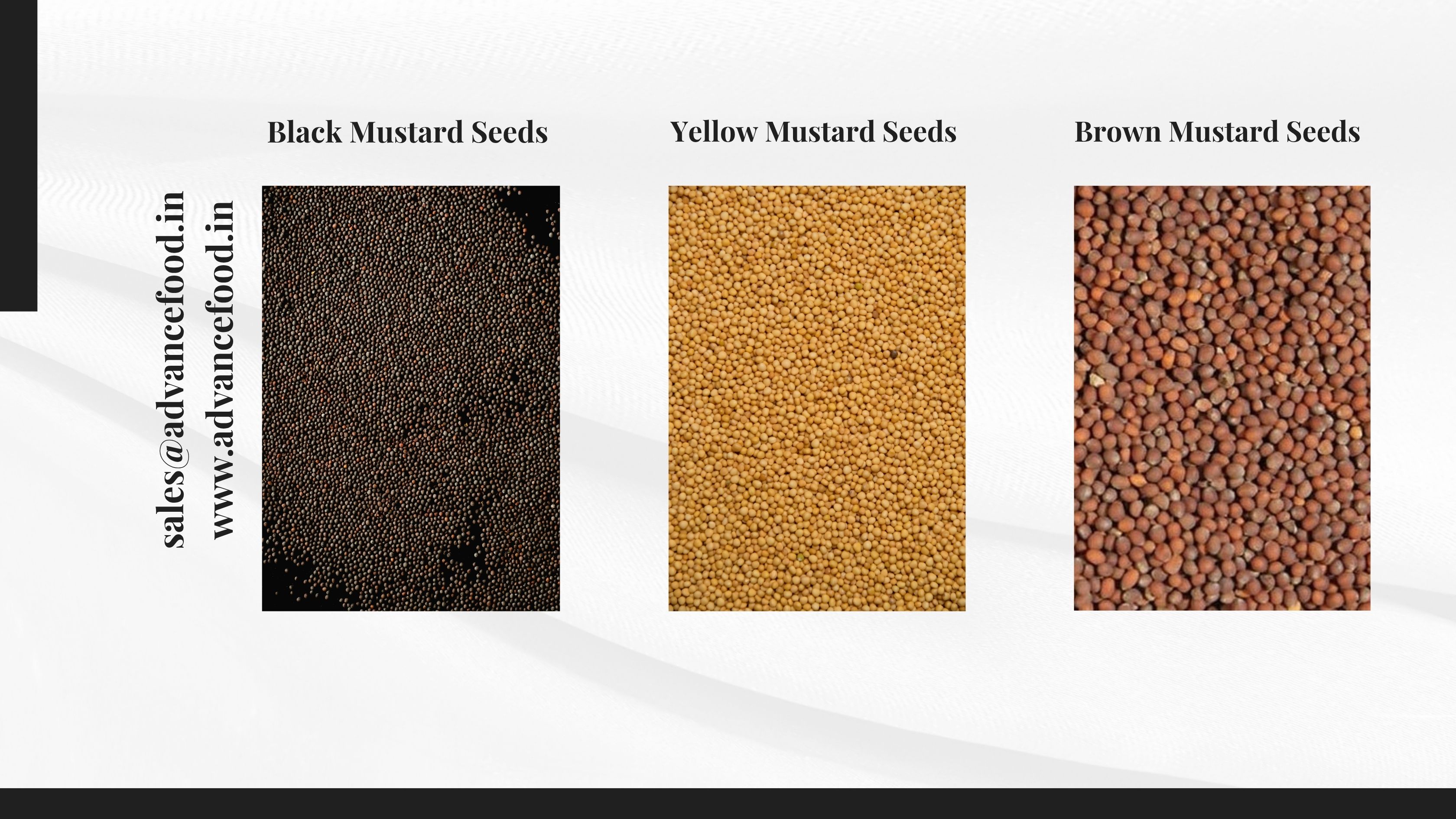
Mustard seeds look remarkably similar from one batch to another : small,round & ordinary in appearance. However, international buyers evaluating a shipment do not rely solely on appearance ; they follow a checklist of specific criteria to determine whether a batch is suitable for oil extraction,food processing, or the production of spices and condiments. As mustard seeds travel from Indian farms to the processing lines of overseas buyers,the following factors are of critical importance.
Varieties
Before examining any quality parameters, buyers need to know exactly which variety of mustard they are purchasing,as yellow,brown & black mustard are not interchangeable.
- Yellow mustard (Sinapis alba) has the mildest flavor and is primarily used in Western-style sauces and table mustard.
- Brown mustard (Brassica juncea) is the dominant variety grown and consumed in India; known for its pungent and zesty flavor, it is used for both cooking oil and vaghar (tempering).
- Black mustard (Brassica nigra) is the most pungent of the three and is typically sought after for specific traditional uses in spices and pickles.
Accurately identifying the variety from the outset helps avoid inconsistencies that cannot be rectified by any subsequent quality control measures.
Oil Content : The First Figure Checked by Buyers
For any buyer purchasing mustard seeds for oil extraction,oil content is typically the first figure discussed and rightly so, as it directly determines the process yield and profitability. Mustard seeds generally contain between 30% and 44% oil, depending on the variety,growing conditions and seed quality; consequently, buyers specifically interested in oil extraction often request a 'Certificate of Analysis' confirming the exact oil content before finalizing a purchase. Buyers who do not extract oil but instead use whole seeds for spice blends or seasonings also pay attention to this parameter,as oil content is closely linked to pungency and flavor intensity.
Moisture Content and Storage Stability
Moisture is a key factor determining shelf life and risks associated with transportation. Generally, a moisture content of 8% or less is considered necessary for mustard seeds intended for export; while some buyers accept levels between 10% and 12%—depending on the intended use and storage conditions - more demanding international buyers seek values at the lower end of that range.Lower moisture directly results in a longer shelf life and reduces the risk of mold or spoilage during long sea voyages. A shipment leaving India in compliance with specifications can fall out of spec if packed carelessly or exposed to moisture ; therefore, strict attention to packaging and storage is just as important as the laboratory results obtained at the time of loading.
Purity and Foreign Matter
Purity is a parameter that largely reflects the care taken during the cleaning of a batch. International buyers typically expect a purity level of 99% or higher ; premium grades range between 99.5% and 99.95%,meaning the shipment is virtually free from foreign matter,dust,stones,broken seeds and immature or shriveled grains.This is generally achieved through mechanical cleaning followed by optical color sorting (Sortex system), which removes damaged or discolored seeds that might otherwise escape visual or manual inspection. Purity is not merely an aesthetic issue: the presence of foreign matter in a batch of mustard seeds can impact everything from oil extraction efficiency to the risk of contamination in food-grade applications.
Size and Visual Uniformity
Buyers also closely examine seed size and uniformity, as seeds are classified by diameter and consistency is crucial for both processing and the appearance of the final product. A batch with mixed sizes dries,presses or grinds unevenly ; This issue arises regardless of whether the buyer is extracting oil,grinding the seeds into powder or fully packaging them for retail sale. Along with size,color is assessed - ranging from golden yellow to reddish-brown or dark black,depending on the variety since any discoloration,spotting, or reduction in color intensity is often interpreted as a sign of poor storage or aged product. Pesticide residues, aflatoxins, and microbiological safety
As with any spice or oilseed destined for international markets,mustard seeds undergo pesticide residue testing to ensure compliance with the destination country's Maximum Residue Limits (MRLs) ; the EU and other developed markets enforce particularly strict thresholds. Microbiological safety - which includes controls for contaminants that could affect suitability for human consumption and the absence of aflatoxins are also part of the standard quality analyses requested by buyers; these are typically documented via a Certificate of Analysis alongside physical and chemical parameters. Buyers working with Indian exporters generally require compliance with FSSAI, APEDA, and Spices Board regulations as a baseline, in addition to any further testing mandated by the destination market.
Packaging and Documentation
Mustard seeds intended for export are typically packed in moisture-resistant,food-grade usually in 25 kg or 50 kg formats for bulk international shipments. These are specifically chosen to protect the product from moisture during transit and to preserve both moisture levels and oil quality until the seeds reach the buyer's facilities. Along with the physical shipment, buyers increasingly expect a documentation package that includes a Certificate of Analysis,a Phytosanitary Certificate, and relevant compliance certificates (such as FSSAI, Spices Board, ISO, HACCP, or GMP, depending on the buyer's own regulatory framework), rather than a simple, generic quality assurance statement lacking documentary support.
Quick Reference: What Buyers Typically Check
| Parameter | Typical Export Standard |
|---|---|
| Variety | Yellow, brown, or black — clearly specified |
| Oil content | 30–44%, depending on variety |
| Moisture content | 8% or below (premium grade) |
| Purity | 99%+ (up to 99.95% for premium) |
| Size/color | Uniform, variety-consistent |
| Safety testing | Pesticide residue, aflatoxin, microbial checks |
| Packaging | 25kg/50kg food-grade, moisture-resistant bags |
Why This Checklist Is Important for Exporters
A shipment of mustard seeds that appears clean and uniform to the naked eye can still fail to meet a buyer's expectations if the oil content falls below the specified level,if moisture levels rise during a long transit, or if the Certificate of Analysis does not support the specifications declared at the time of sale. Exporters who proactively verify and document these parameters rather than waiting for the buyer to request such information close deals faster and build lasting business relationships,which are far more valuable than one-off orders.
Conclusion
International buyers evaluating mustard seeds for import do not judge solely by appearance; they verify variety,oil content,moisture levels,purity,size and color uniformity, and safety compliance against documented standards all backed by proper packaging and a verified Certificate of Analysis.For any serious exporter in the mustard seed sector,understanding and proactively meeting these quality parameters goes beyond merely passing a buyer's inspection : it establishes the credibility needed to transform a single shipment into a long-term export partnership.
FAQs
- Where can I find a mustard seeds exporter from Gujarat ?
You can contact Gujarat-based spice suppliers for bulk Indian mustard seeds for domestic and international markets. - What are the quality parameters for mustard seeds export ?
Key parameters include purity, moisture content, foreign matter, colour, seed condition, and compliance with destination-country requirements. - What are the moisture requirements for mustard seeds export ?
Moisture limits depend on buyer specifications and destination-market standards. Buyers should confirm the agreed limits before shipment. - What purity level is required for export-quality mustard seeds ?
Purity requirements depend on the buyer, seed grade, contract specifications, and applicable import regulations. - Is laboratory testing required for mustard seeds export ?
Testing may be required for pesticide residues, contaminants, microbiological parameters, and other criteria depending on the destination market. - What is a COA for mustard seeds export ?
A Certificate of Analysis (COA) records tested product parameters and helps buyers verify compliance with agreed quality specifications. - Are cleaned and graded mustard seeds available in bulk ?
Yes, buyers can request cleaned and graded mustard seeds, including machine-cleaned or Sortex-cleaned grades, subject to availability. - Can mustard seeds be exported in 25 kg bags ?
Yes, 25 kg bags and customised packaging may be available depending on supplier capabilities and buyer requirements. - What documents are required to export mustard seeds from India ?
Common documents include a commercial invoice, packing list, shipping documents, and applicable export or phytosanitary documents. Requirements vary by destination. - How can international buyers choose a reliable Indian mustard seeds exporter ?
Check product specifications, quality-testing reports, traceability, packaging, export documentation, certifications, and the supplier’s ability to meet agreed shipment requirements.