
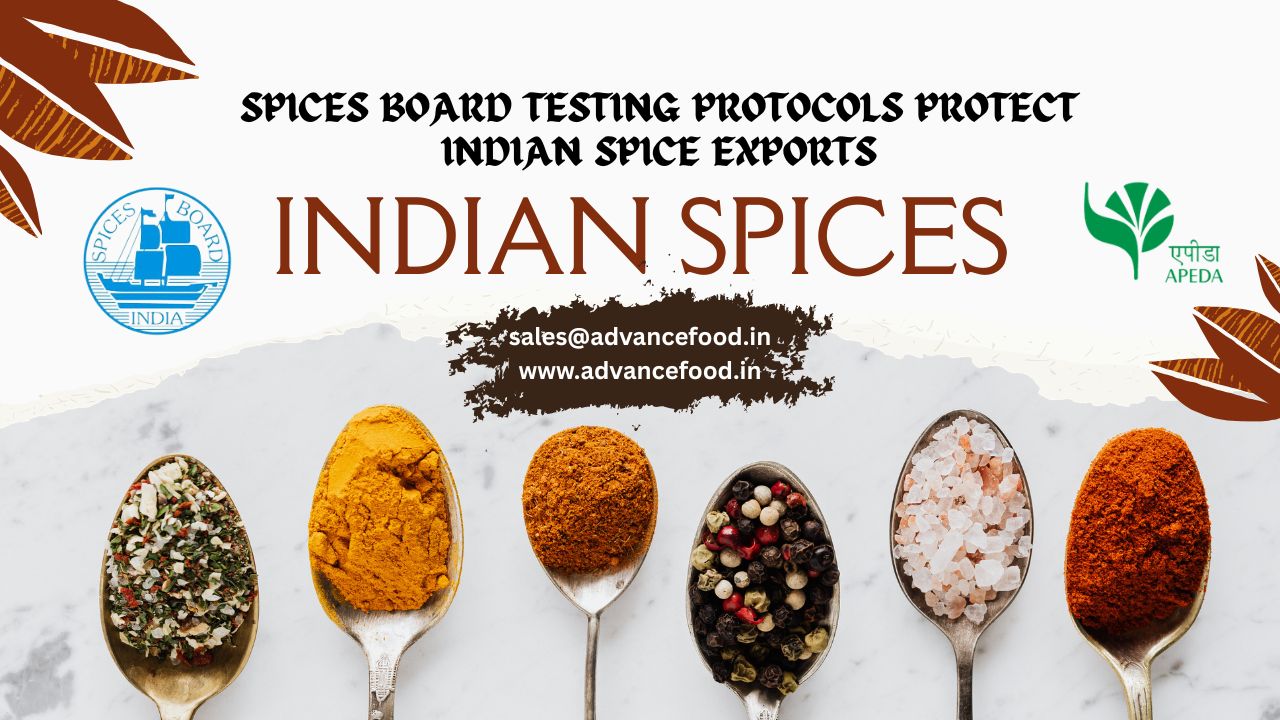
India exports spices to more countries than any other nation in the world & this standing is not merely due to volume ; it stems from the fact that a buyer in Rotterdam or Tokyo can place complete trust in a shipment of chili,cumin,turmeric leaving an Indian port,even without ever having seen the farm where it originated.This trust does not happen by accident. It is built shipment by shipment thanks to testing protocols overseen by the Indian Spices Board.
What exactly does the Spices Board do?
The Indian Spices Board was established under the Spices Board Act of 1986 and operates under the Ministry of Commerce and Industry,serving as the primary body responsible for the export promotion,quality regulation and development of Indian spices.Its role extends beyond administrative procedures and promotion : it operates its own Quality Evaluation Laboratories (QELs) - the first of which was established in early 1989 and has developed a network of laboratories in major spice trading centers (such as Kochi,Mumbai,Chennai,Delhi,ahmedabad and Guntur) to enable the direct analysis of shipments against international standards before they leave the country.
Registration with the Spices Board is also the starting point for any exporter ; along side the IEC (Import Export Code),such registration is a mandatory requirement for the legal export of spices from India and provides access to quality certifications, technical assistance and testing infrastructure elements that make it possible to meet export requirements.
Key Parameters Covered by Spices Board Testing
The Spices Board's testing protocols focus on several parameters that are of great importance to importing countries ; each of these addresses specific health or safety concerns raised by buyers. Aflatoxin is a key issue particularly for chili,cumin and other sensitive spices because these naturally occurring fungal toxins are strictly regulated internationally.The EU limits against which the Board's analyses are calibrated are set at 5 ppb for Aflatoxin B1 and 10 ppb for total Aflatoxins ; these thresholds are so low that a single improperly stored or dried batch can cause an entire shipment to fail compliance standards.
Pesticide residues :These are analyzed using a comprehensive multi-residue panel that often covers over 200 compounds,as the EU,in particular,enforces some of the world's strictest Maximum Residue Limits (MRLs). Special attention is also paid to Ethylene Oxide (ETO),used in certain fumigation processes ; the MRL for the EU market is extremely strict (0.02 mg/kg) - so much so that the Spices Board has issued specific circulars making ETO testing and sanitary certification mandatory for export shipments.
Sudan Dyes (I–IV) : Specific testing is conducted for these because the illegal use of these industrial dyes to enhance the appearance of chili and chili-based products has occasionally been detected ; the requirement here is simple and absolute : non -detected.
Microbiological Contamination : Tests are carried out to detect Salmonella and other pathogens as part of the comprehensive food safety panel currently required by many importing countries. These are complemented by physical quality parameters such as moisture content, ASTA color value and volatile oil content for which the Board has established specific quality standards for each type of spice.
Mandatory Testing and Certification Chain
For certain high-risk spice categories - specifically chili and cumin,as well as their derivatives the Spices Board operates a mandatory inspection program.This means that such shipments cannot leave India for major markets like the EU without undergoing the Board's quality assessment system.The process typically results in the issuance of an official health certificate covering pesticide residues and where applicable,ETO analysis ; This certificate is included in the documents accompanying the shipment.
In addition to the Board's own eight Quality Evaluation Laboratories (QELs), a laboratory accreditation system exists to enhance testing capacity by recognizing other NABL-accredited food analysis centers across India.International private companies such as SGS India,Eurofins,TÜV SÜD South Asia & Vimta Labs also operate in this sector ; exporters frequently utilize these companies for pre-shipment testing before obtaining official certification from the Spices Board.
Why This Infrastructure Matters More Than It Looks
It is easy to view testing requirements merely as a cost of regulatory compliance,but the reality is quite the opposite. Shipments that pass the Spices Board's tests are accompanied by supporting documentation detailing aflatoxin levels,pesticide residues, and microbiological results.which allows foreign buyers,customs authorities, or food safety agencies to compare the data against their own national standards.Without this system, importing nations would have to place blind trust in the Indian spice industry for every shipment; In a world where the rejection of a single shipment of chillies or a reported issue with a batch of mangoes can trigger intensive scrutiny of an entire export category, trust faces its sternest test.
It is also essential to address areas where the system still needs improvement. Analyzing whole spices for pesticide residues is simpler than analyzing spice blends a process that typically requires gas chromatography and mass spectrometry - yet currently only a small fraction of India's accredited laboratory network possesses this capability.Furthermore, there is no single,formally defined legal standard under Indian food laws determining what constitutes export quality in reality, the standards an exporter must adhere to are a combination of Spices Board protocols,FSSAI requirements, and the specific regulations of the importing country.Precisely because of this lack of a uniform and integrated standard, exporters who incorporate rigorous testing methods into their own processes rather than viewing testing merely as a final step before shipment - encounter far fewer unexpected hurdles at the port.
What this means for exporters
For an exporter, the practical implication is that the Spices Board's testing protocols are not merely a one-time procedural formality ; rather, they represent standards that should be integrated right from the sourcing and processing stages. This entails working with processors registered with the Spices Board ; managing moisture and storage conditions to control the risk of aflatoxin contamination before samples reach the lab ; carefully selecting phytosanitary products and timing their application ; and treating the laboratory report - whether from the Spices Board or an NABL-accredited facility - as a genuine tool for quality assurance rather than a last-minute bureaucratic hurdle.Exporters who consistently adopt this approach not only avoid shipment rejections but also build a track record that instills enough confidence in international buyers to accept consignments without requiring additional testing.
Conclusion
The strength of the Indian spice export industry rests on more than just its reputation ; It is supported by a testing framework that verifies the presence of aflatoxins,pesticide residues,Sudan dyes,and microbiological safety parameters against the specific limits required by each importing country. All of this is underpinned by Spices Board registration,a national network of quality-testing laboratories, and mandatory certification for high-risk spice categories. For any exporter serious about operating in international markets, understanding the Spices Board's testing protocols is not optional reading: it makes the difference between seamless customs clearance and having a shipment rejected at the port; ultimately, it ensures that Indian spices retain consumer trust on store shelves that the exporters themselves may never see.
Spices Board testing protocols,Indian spice export quality,aflatoxin testing spices,pesticide residue limits spices,Spices Board registration India,Quality Evaluation Laboratory,EU spice export compliance,export quality certification spices,Spices Board Act 1986.